
“Crepey” is one of those words patients use in clinic when their skin doesn't necessarily have deep wrinkles, but it no longer feels quite as firm, smooth or resilient as it once did.
It might be the fine, crinkled skin underneath the eyes, a slightly loose appearance across the neck, or those little lines on the chest that seem to become more noticeable with age.
Often, patients tell me they've tried changing their skincare, using richer moisturisers or introducing collagen products, but the texture doesn't seem to improve.
The important thing to understand is that crepey skin isn't a diagnosis in itself. It's a description of how the skin looks and feels, and there can be several reasons behind those changes.
At Oriah, we look at what's happening within the skin before deciding how best to treat it. For some patients, improving hydration and their skincare routine may be enough. For others, injectable treatments such as Sunekos can be useful in improving skin quality, elasticity and fine lines.
The starting point is understanding why the skin has changed.
What Is Crepey Skin?
Crepey skin describes skin that appears thin, finely wrinkled, loose or crinkled, often resembling the texture of crepe paper.
Unlike deeper wrinkles, which can develop through repeated facial movement, changes in facial structure and ageing, crepey skin is often associated with a loss of elasticity and changes in the skin's underlying support.
You may notice that the skin looks relatively smooth when relaxed but develops lots of tiny folds when you smile, move or gently pinch it.
It can also feel less supple than it used to.
Although crepey skin becomes more common as we age, it isn't exclusively an age-related concern. Sun exposure, genetics, hormonal changes and environmental factors can all contribute to changes in skin quality.
And importantly, not all crepey skin needs the same treatment.
What Causes Crepey Skin?
Our skin is supported by a complex network of collagen, elastin, hyaluronic acid and other components that help maintain its strength, hydration and flexibility.
As we get older, several things begin to change.
Loss of Collagen and Elastin
Collagen provides much of the skin's structural strength, while elastin helps it stretch and return to its original position.
Over time, collagen production slows and the skin's existing support structures change. Elastin fibres can also become damaged, particularly through repeated exposure to ultraviolet radiation.
The result is skin that becomes less resilient, less firm and more prone to fine lines and laxity.
Reduced Hydration
Hyaluronic acid occurs naturally within the skin and plays an important role in retaining moisture.
As the skin ages, changes in its ability to retain hydration can make fine lines and crepey texture more noticeable.
Dehydration doesn't necessarily cause structural skin ageing, but it can exaggerate the appearance of skin that has already lost some of its elasticity.
Sun Damage
If there's one factor I regularly come back to with patients, it's sun exposure.
UV radiation contributes to collagen breakdown, changes in elastin and premature skin ageing. Over time, this can lead to fine wrinkles, uneven pigmentation and a loss of firmness.
It's also why we often see crepey skin developing on the neck, chest and hands - areas that receive considerable sun exposure but don't always get the same skincare attention as the face.
Daily broad-spectrum SPF is one of the most important things you can do to protect your skin, regardless of whether you're having aesthetic treatments.
Hormonal Changes
Hormonal changes, particularly around perimenopause and menopause, can also affect skin thickness, hydration and collagen levels.
Some patients notice their skin changing quite quickly during this period, even when their skincare routine hasn't changed.
This doesn't mean that every change requires treatment, but understanding the role of hormones can be helpful when deciding how to manage changes in skin quality.
Where Does Crepey Skin Commonly Appear?
Crepey skin can develop almost anywhere, although there are certain areas we see particularly often in clinic.
Crepey Skin Under the Eyes
The skin around the eyes is naturally thinner than much of the rest of the face, which makes changes in hydration, elasticity and texture particularly noticeable.
Patients often describe fine crinkling beneath the lower eyelids, especially when smiling or applying concealer.
However, not every under-eye concern is caused by poor skin quality.
Hollowing, pigmentation, puffiness and changes in the surrounding facial structure can all contribute to a tired appearance. That's why treating the under-eye area requires a careful assessment rather than assuming everyone needs the same injectable treatment.
Crepey Skin on the Neck
The neck is another area where patients often notice changes in elasticity.
You may start to see fine horizontal lines, a slightly crinkled appearance or skin that no longer feels as firm as it once did.
Sun exposure and natural ageing can both contribute, but it's important to distinguish fine crepey texture from more significant skin laxity.
Treatments that improve skin quality may soften fine lines, but they cannot remove substantial excess skin.
Crepey Skin on the Chest and Décolletage
The chest is frequently exposed to sunlight, and the skin here can develop a combination of fine lines, pigmentation and changes in texture.
For some patients, lines become particularly noticeable after sleeping on their side.
Treatment may involve improving skin hydration and quality, addressing sun damage or combining approaches depending on the concerns present.
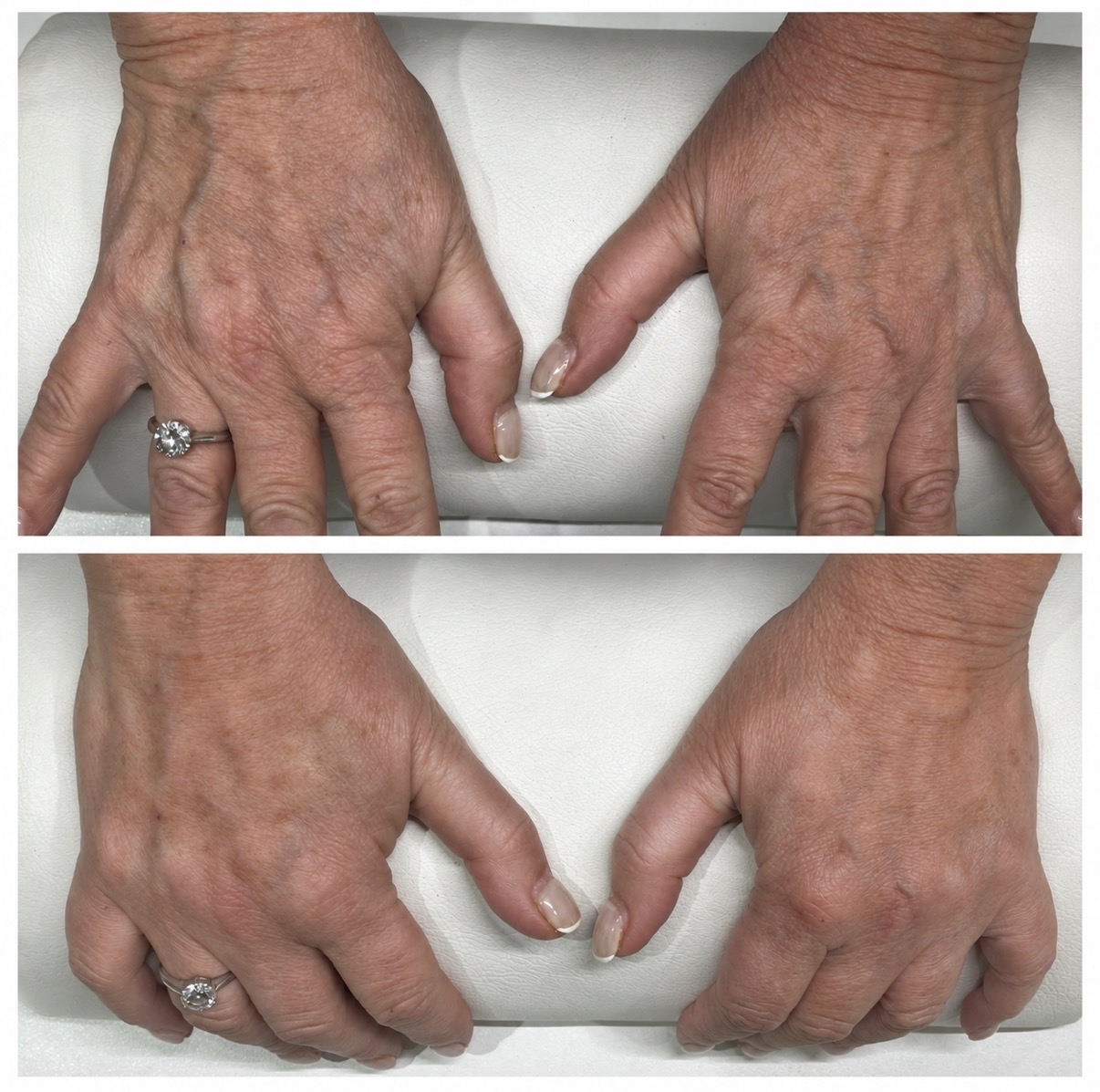
Crepey Skin on the Hands and Arms
Our hands and arms are often one of the first areas to show visible signs of ageing.
Over time, skin can become thinner and less elastic, making fine lines, veins and underlying structures more noticeable.
Again, it's important to separate skin-quality concerns from volume loss, because the two may require different treatments.
Can Crepey Skin Be Improved?
Yes, in many cases the appearance of crepey skin can be improved, although the degree of improvement depends on what's causing it.
One of the most important distinctions I make during consultations is whether we're dealing primarily with:
- Fine lines and reduced skin hydration
- Changes in skin texture and elasticity
- Loss of collagen and underlying structural support
- More significant skin laxity or excess skin
These concerns can overlap, but they're not interchangeable.
A treatment that improves hydration won't necessarily tighten significantly loose skin. Equally, adding volume with dermal filler isn't always appropriate when the main concern is fine, crepey texture.
This is where a treatment such as Sunekos may be worth considering.
What Is Sunekos and How Does It Work?
Sunekos is an injectable skin rejuvenation treatment that combines hyaluronic acid with a specific blend of six amino acids.
Unlike traditional dermal fillers, which are commonly used to restore volume or improve facial contours, Sunekos is designed to support skin quality.
Hyaluronic acid helps maintain hydration, while the amino acid formulation is intended to support the extracellular matrix - the network surrounding skin cells that contributes to the skin's structure and function.
The treatment is designed to support the processes involved in collagen and elastin production, with the aim of improving skin hydration, elasticity and fine lines over time.
For patients with crepey skin, this is particularly relevant because the concern is often less about missing volume and more about the quality and resilience of the skin itself.
There is published clinical research suggesting improvements in selected measures of skin ageing following treatment with hyaluronic acid and amino acid formulations. However, studies are relatively small, and results should not be interpreted as a guarantee of significant skin tightening or reversal of ageing.
At Oriah, we consider Sunekos as one option within a broader treatment plan, rather than a universal solution for crepey skin.
Can Sunekos Help Crepey Skin Under the Eyes?
The under-eye area is one of the areas where Sunekos can be particularly useful for appropriately selected patients.
If the concern is fine lines, delicate crepey texture or reduced skin hydration, Sunekos may help improve the appearance and quality of the skin without deliberately adding facial volume.
However, if the main concern is pronounced hollowing, prominent eye bags or pigmentation, Sunekos alone may not provide the improvement you're hoping for.
The under-eye area is anatomically complex, and not every patient is suitable for injectable treatment here.
This is why we assess the skin, surrounding structures and underlying cause of the concern before making a recommendation.
What Does Sunekos Treatment Involve?
Sunekos is administered through a series of small injections into the selected treatment area.
Before treatment, we assess your skin, medical history, previous aesthetic treatments and the concerns you'd like to address.
If Sunekos is appropriate, we'll discuss the formulation, treatment areas and recommended course.
Unlike some injectable treatments that are designed to create an immediate structural change, Sunekos is generally approached as a course of treatments, with improvements in skin quality developing gradually.
The number of sessions and spacing will depend on the formulation used, treatment area and individual assessment.
Temporary redness, swelling, small bumps, tenderness or bruising can occur following injections. Although downtime is often limited, it's worth allowing for these possibilities, particularly when treating delicate areas such as under the eyes.
As with any injectable treatment, there are risks and contraindications that should be discussed during consultation.
Sunekos vs Profhilo: Which Is Better for Crepey Skin?
Profhilo is a popular treatment for improving skin hydration and giving the skin that lovely, healthy-looking glow. But when a patient comes to me specifically concerned about thin, finely wrinkled or crepey skin, Sunekos is often my go-to treatment.
The difference is in what we're trying to achieve. Profhilo focuses on improving hydration and skin quality, whereas Sunekos combines hyaluronic acid with six amino acids designed to support the skin's extracellular matrix, including the processes involved in collagen and elastin production.
For areas such as crepey under-eye skin, fine lines around the mouth or delicate skin on the neck or arms, Sunekos is often the treatment I'd consider first, depending on the patient's individual needs.
That's not to say Profhilo can't help improve the appearance of crepey skin, or that Sunekos is automatically better. But if your main concern is skin that's becoming thinner, less elastic and more finely crinkled, Sunekos is a treatment worth exploring.
As always, it's about choosing the right treatment for the concern.
Sunekos vs RF Microneedling for Crepey Skin
RF microneedling approaches skin rejuvenation differently.
Rather than injecting a formulation intended to support hydration and the extracellular matrix, RF microneedling uses controlled needle penetration and radiofrequency energy to create a tissue response that encourages remodelling.
At Oriah Rugby, radiofrequency microneedling may be considered for concerns such as skin texture, fine lines and selected degrees of laxity.
Where Sunekos may be particularly useful for delicate skin quality concerns, RF microneedling may be more appropriate when we want to address broader textural changes and stimulate tissue remodelling.
However, the suitability of RF microneedling depends on the treatment area, skin type, device and clinical assessment.
Some patients may benefit from a combination of treatments, but that doesn't mean combining treatments is necessary or appropriate for everyone.
Sunekos vs PRP: What's the Difference?
PRP, or platelet-rich plasma, is another treatment we use at Oriah to support skin rejuvenation.
PRP involves processing a sample of the patient's own blood to concentrate platelets, which contain growth factors involved in tissue repair processes.
Sunekos, by comparison, delivers a prepared formulation of hyaluronic acid and amino acids.
Both may be considered when the goal is to improve skin quality rather than add volume, but they work through different mechanisms.
The evidence for both treatments varies by indication and protocol, so it's important not to assume either will reliably reverse skin laxity or produce identical results.
Our recommendation depends on the condition of the skin, treatment area, medical suitability and the patient's preferences.
What About Skincare? Can Creams Treat Crepey Skin?
Skincare absolutely has a role to play, although it's important to be realistic about what topical products can achieve.
A good moisturiser can improve hydration and temporarily soften the appearance of fine lines. Ingredients such as retinoids may also help improve aspects of photoaged skin over time when used appropriately.
But skincare cannot always address deeper structural changes or significant laxity.
For most patients, I'd start with the fundamentals: consistent sun protection, a suitable moisturiser and a skincare routine that supports rather than irritates the skin.
Broad-spectrum SPF 30–50, applied generously and reapplied as needed, is particularly important.
There's little benefit in investing in treatments to improve skin quality while continuing to expose the skin to avoidable UV damage.
Skincare and in-clinic treatments should work together, not compete with each other.
Which Treatment Is Best for Crepey Skin?
There isn't one answer, and I think that's an important point to finish on.
Two patients can come into the clinic describing exactly the same concern - crepey skin, but need completely different treatment plans.
One may have fine lines and dehydration that respond well to a skin-quality treatment such as Sunekos.
Another may have more significant laxity, where RF microneedling or another approach deserves consideration.
And another may have changes in facial structure that make the skin appear looser, even though skin texture isn't the main issue.
At Oriah, our approach has always been to assess the face and skin as a whole, rather than choosing a treatment simply because it's popular or because it worked for somebody else.
Sunekos can be a useful option for selected patients looking to improve fine lines, hydration and skin elasticity, particularly in delicate areas. But the aim isn't to promise that every line will disappear.
It's to understand what has changed, decide what can realistically be improved and create a treatment plan that makes sense for you.
Questions our patients often ask
Does Sunekos work for crepey skin?
Sunekos may improve the appearance of fine lines, hydration and skin elasticity in appropriately selected patients. It is particularly worth considering where delicate skin texture is the main concern rather than significant excess skin or volume loss. Results vary, and a course of treatments is generally recommended.
How many Sunekos treatments will I need?
Many Sunekos protocols involve three to four treatment sessions, although the number and spacing depend on the formulation, treatment area and individual skin concerns. Your practitioner will recommend a suitable plan following consultation.
Is Sunekos better than Profhilo for under-eye wrinkles?
Sunekos may be considered for fine, crepey under-eye skin, depending on the formulation and clinical assessment. Profhilo is more commonly used for broader facial and neck skin-quality concerns. Neither is universally better, and the cause of the wrinkles should be assessed before choosing treatment.
How long do Sunekos results last?
Results develop gradually and vary between individuals. Maintenance treatment may be recommended after the initial course, often within six to twelve months, depending on the formulation, skin condition and response to treatment. Sunekos does not permanently stop skin ageing.
Can crepey skin be tightened without surgery?
Some non-surgical treatments can improve the appearance of fine lines, skin texture and mild laxity. However, significant loose or excess skin cannot reliably be corrected with injectable skin boosters. The most appropriate option depends on the degree and cause of the laxity.
ready when you are
Sunekos and skin rejuvenation at Oriah
If you've started noticing crepey skin beneath your eyes, across your neck or elsewhere on your face and body, a consultation is the best place to begin.
At Oriah, we offer personalised aesthetic consultations and skin rejuvenation treatment planning across our clinic locations in Rugby, London, Wilmslow, Jersey and Guernsey.
Whether you're considering Sunekos, Profhilo, PRP, RF microneedling or simply want to understand why your skin has changed, we'll assess your concerns and talk you through the options that may be suitable.
Because the best treatment isn't necessarily the newest one, or the one everybody is talking about.
It's the one that addresses the problem you're actually trying to solve.
Book a consultation with Oriah Clinics to discuss your skin concerns and explore a personalised treatment plan.
Enquire Now